
Guidance Is Not a Boundary: Four Lessons from a Security Internship
The recent open weights letter didn’t introduce a new idea, it confirmed ours: the future of AI belongs to organizations that own their intelligence.
Thomas Fraunholz, CEO of Open Hippo GmbH, shares how artificial Intelligence is rewriting the rules of every industry it touches, and aerospace manufacturing is no exception.

Artificial Intelligence is rewriting the rules of every industry it touches, and aerospace manufacturing is no exception. In Aerospace, precision marks the thin line between success and catastrophic failure. That is why we must ensure quality is evolving. Imagine a future where every inch of an aircraft component is inspected with pinpoint accuracy—automatically, efficiently, and at a fraction of today’s costs. This future is happening, powered by open source computer vision.
While Vision-Language Models (VLMs) steal headlines with their flashy capabilities, a quieter yet equally revolutionary shift is underway: the optimization of traditional computer vision models for industrial use. In aerospace open source models are emerging as an undeniable force in enforcing zero-tolerance for defects. They promise to break the chains of expensive, proprietary systems, offering cost-effective, adaptable, and high-performing alternatives. But this revolution isn’t without its hurdles, and the impact goes far beyond tech.
Aerospace manufacturing is an unforgiving industry. When you’re building machines that defy gravity and travel at supersonic speeds, precision is everything. Historically, this precision has come at a steep price. Proprietary computer vision systems dominate the industry, delivering reliable defect detection and process optimization. But these systems are costly, inflexible, and lock manufacturers into long-term vendor contracts that stifle innovation.
Enter open source computer vision models. They’re cost-effective, adaptable, and built for customization. This is an irresistible proposition in an industry hungry for efficiency. But the aerospace sector doesn’t play by ordinary rules. It demands low latency, domain-specific datasets, and a level of reliability where even a minor flaw can have catastrophic consequences. This high-stakes environment makes the transition to open-source both complex and essential. The question is: Can open source models deliver the precision and reliability the aerospace industry demands?
Learn more about AI and defense at OpenTeams’ National Defense Summit.
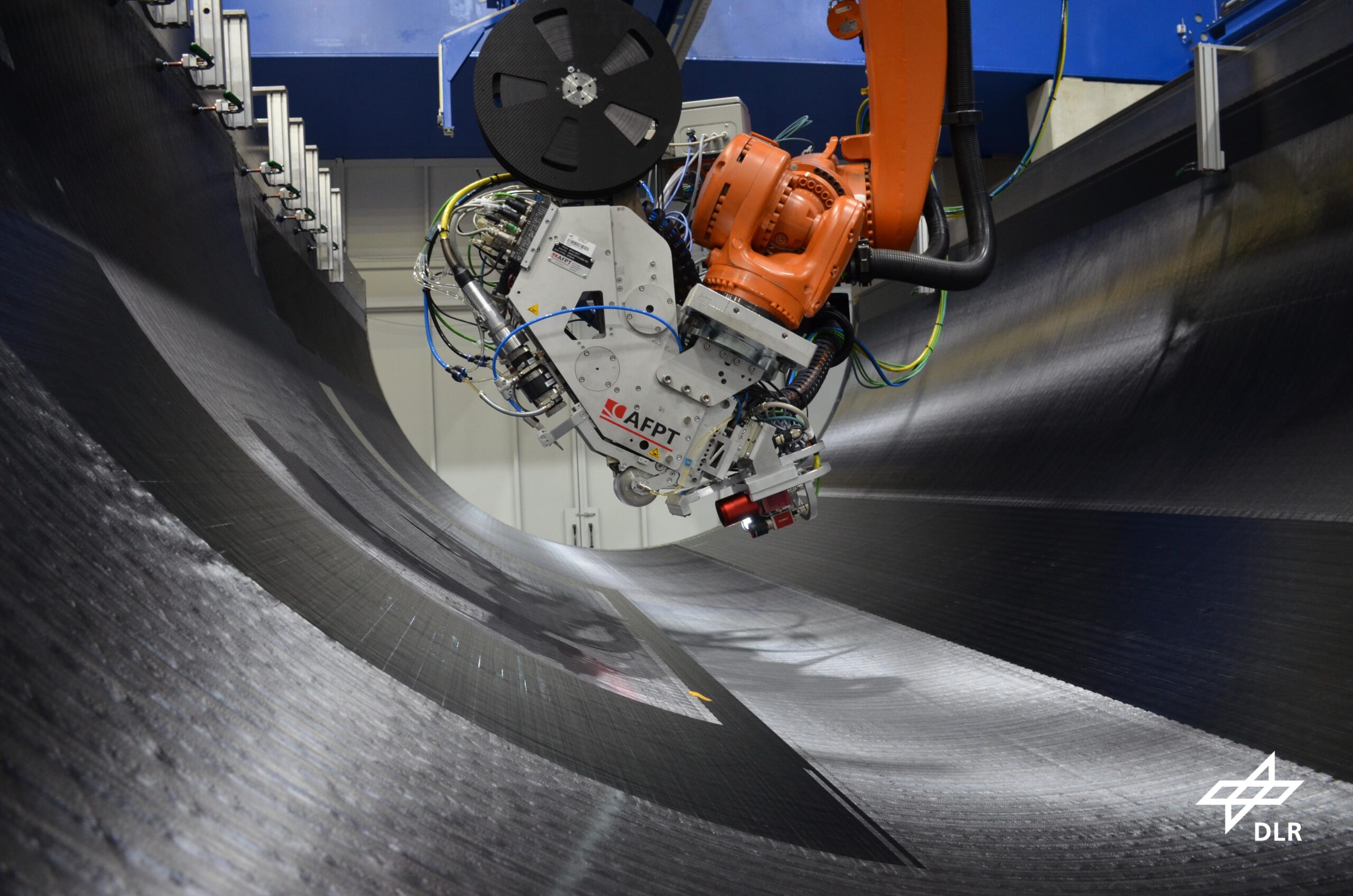
To understand the true potential of open source computer vision, look no further than the German Aerospace Center (DLR). They set out to solve a critical problem in the carbon fiber-reinforced polymer (CFRP) tape-laying process—a manufacturing step essential for creating lightweight yet robust aerospace components. Even the smallest defect, like a gap or overlap in the tape, can compromise the integrity of an entire aircraft. Traditional quality control methods are labor-intensive and prone to human error. This means the stakes couldn’t be higher.
DLR turned to open source computer vision models to revolutionize this process. Using a specialized Tape Placement Sensor (TPS) employing laser triangulation, they captured precise height data and converted it into 2D grayscale images. Each pixel’s intensity represented subtle surface height variations, forming the basis for advanced defect detection. This approach was a game-changer: automated, consistent, and far more efficient than traditional methods. But the journey wasn’t without challenges, revealing valuable insights into the potential and limitations of open source technology in high-stakes environments.
Proprietary systems are rigid, expensive, and limit innovation to the boundaries set by their creators. In contrast, open source models offer aerospace manufacturers the freedom to customize, optimize, and iterate quickly. This flexibility is a powerful advantage in an industry where production environments are dynamic, and no two factories are exactly alike.
But here’s the catch: not all open source models are created equal. Their performance hinges on multiple factors, including model architecture, dataset quality, and the specific requirements of the use case. Choosing the right model isn’t a one-size-fits-all decision. It requires rigorous testing, deep expertise, and a willingness to experiment.
Open source models are powerful tools, but they come with challenges that aerospace manufacturers can’t afford to ignore.
1. Security and Compliance Risks
Open source software is inherently transparent, which is a double-edged sword. While transparency greases the wheels of innovation, it also exposes vulnerabilities. In an industry as sensitive as aerospace, the stakes are high. Security breaches or compliance failures can be catastrophic. Manufacturers must implement rigorous cybersecurity protocols and ensure full compliance with industry standards.
2. Resource and Expertise Requirements
Open source doesn’t mean plug-and-play. Implementing these solutions requires specialized knowledge in machine learning, computer vision, and cybersecurity. It’s an investment that can offset the cost savings if not well-managed. Manufacturers need skilled talent to modify, maintain, and secure these systems.
3. Intellectual Property Concerns
Open source licenses are a legal challenge. They vary widely and carry complex obligations that can expose proprietary data if not managed carefully. In aerospace, navigating these licenses requires meticulous legal oversight. The risk of accidental IP leakage is real, and the consequences could be devastating, especially in an industry where intellectual property is a serious competitive advantage.
DLR’s experiment involved 73,749 labeled images of the CFRP tape-laying process, categorized into three classes:
To avoid bias towards the dominant “nominal” class, they balanced the dataset by sampling equal numbers from each category. The images were preprocessed by scaling and padding from 16-bit grayscale to 8-bit RGB and resized to 224×224 pixels, preserving essential height variations. Using NVIDIA A6000 GPUs, they fine-tuned various architectures from the Hugging Face Model Hub, evaluating performance using the mean F1 score which is a robust metric for multi-class classification.
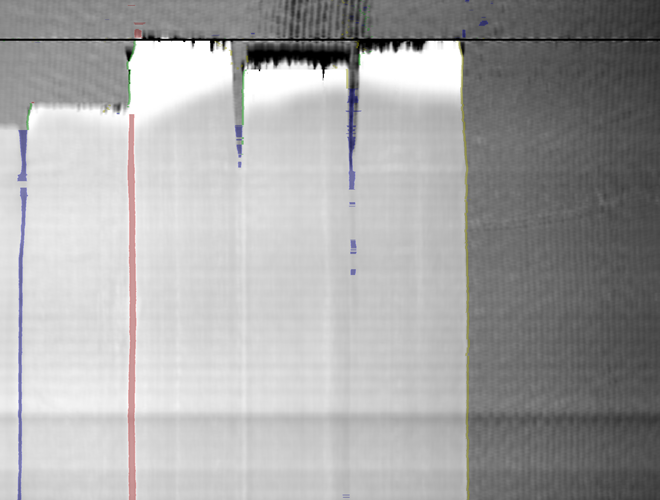
Images were scaled and padded from 16-bit grayscale to 8-bit RGB, resized to 224×224 pixels. Special attention was given to preserving height variations essential for accurate defect detection.
Various open-source architectures from the Hugging Face Model Hub were fine-tuned using transfer learning techniques on NVIDIA A6000 GPUs. Extensive hyperparameter tuning was conducted, and models were evaluated using the mean F1 score—a robust metric for multi-class classification.
1. Vision Transformers (ViTs) and Fully Modular Networks (FMNs)
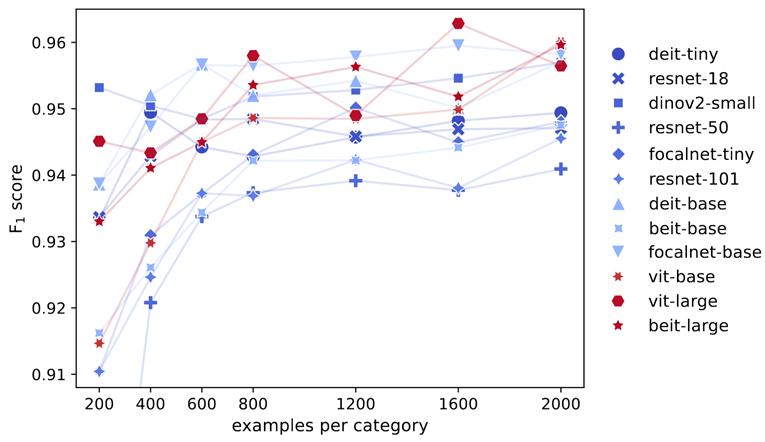
ViTs and FMNs consistently outperformed traditional Convolutional Neural Networks (CNNs), particularly on complex tasks. This validates the growing consensus that these newer architectures are better suited for nuanced defect detection.
2. Smaller Models Bring Greater Efficiency
Smaller models matched or even exceeded the performance of larger models, especially with smaller datasets. This is a game-changer for edge computing. It challenges the conventional wisdom that bigger models always perform better.
This study demonstrates the untapped potential of open source computer vision models in aerospace manufacturing. By leveraging Vision Transformers and Fully Modular Networks, a solution was developed that balances computational efficiency and performance.
Smaller models like dinov2-small and deit-tiny delivered accuracy with minimal datasets, proving ideal for scenarios with limited resources.
AI evolves at light speed. The need for efficient, scalable, and cost-effective solutions will only grow. By embracing open source tools and adopting a resource-efficient approach, aerospace manufacturers can unlock unprecedented opportunities for growth and innovation.
Additional Resources
Full Paper
Github

Thomas Fraunholz is the founder and CEO of Open Hippo GmbH, a company devoted to building GDPR- and AI Act-compliant infrastructure for businesses. He is also an international speaker at PyData and PyCon conferences. After earning his PhD in Applied Mathematics, Thomas became an expert in MLOps, LLMs and industrial AI. During this time, he led two publicly funded, open source AI research programs with the German Aerospace Center, underscoring his commitment to advancing responsible and innovative AI solutions.
The recent open weights letter didn’t introduce a new idea, it confirmed ours: the future of AI belongs to organizations that own their intelligence.
We use cookies to improve your experience on this website. You may choose which types of cookies to allow and change your preferences at any time. Disabling cookies may impact your experience on this website. You can learn more by viewing our Cookie Policy.