
Becoming a Frame Evangelist
The recent open weights letter didn’t introduce a new idea, it confirmed ours: the future of AI belongs to organizations that own their intelligence.
“The Sidelines”
Tech Lowdown with Dillon Roach

I’ll be brief. I wrote this myself. It is time!
For those of you who missed my first post in this series, welcome. My name is Dillon Roach, an engineer here at OpenTeams. In a not-so-distant previous life I used to be a physics nerd; a Ph.D. student working away with the great folks at Brookhaven National Lab’s RHIC to make sense of the Quark-Gluon Plasma. No, don’t run away yet, I swear it is relevant. Much like its larger cousin, CERN’s LHC, RHIC is a particle collider where scientists whiz particles in circles in order to smash them into pieces and study the wreckage. At the heart of the exercise are building-sized detector systems with onion-layers of tech; and parts of those layers, over time, like to misbehave. Because of this, if you were lucky enough to be in charge of one of the subsystem’s well-being, you could expect frequent trips into the inner layers of that tech onion to fix a wire, solder a connection, replace an electronics board – get hands on.
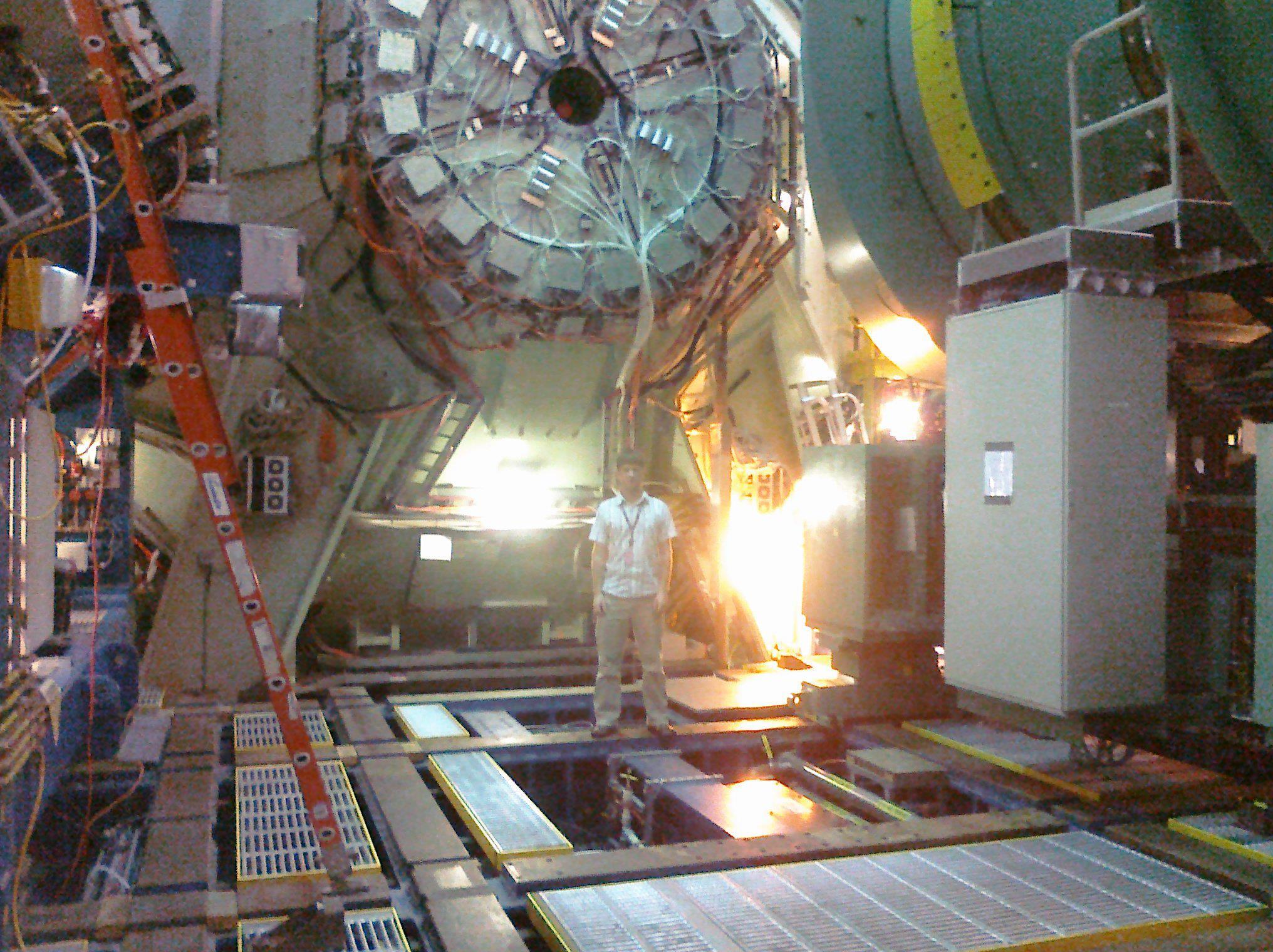
The author inside the Deathstar (ok, maybe PHENIX) circa a million years ago
So, why am I even bringing this up? Because I read a news article recently in a large, well respected paper and the author was going on about the moment in AI. How we’ve started to step into new territory with models capable of taking over a large portion of the daily code that some folks are writing. And I was nodding along; yep, seems like what I’ve been seeing too. That is, until the author mentioned which providers had the best models for different tasks. They correctly landed one of four to my eye. And it dawned on me that this person doesn’t actually use these tools themselves. I’m sure they pop in on ChatGPT every so often. Maybe they even queue up a deep research or two on Gemini. Things you could do a year and a half ago. But, that’s decades ago in AI Time. If you’re there with them and haven’t spun up a Claude Code session with Opus 4.6, or seen an agent run through a series of tool calls to get something accomplished for you: now’s the moment to get hands on.
I’m certainly not the first to say it – other folks have been saying the same thing quite a bit over the last few months, with much more code-cred than I could muster on my best day. “But I’m not a coder, this isn’t for me yet;” “Our organization is still sorting out our data, we’re not ready for AI” and many other excuses might jump to mind, but let me assure you: it’s time to try anyway. Because the latest and greatest can do more than you likely realize if you haven’t tried them for some time and will do more again soon if the trend continues. I’d recommend starting with Claude Code (no they don’t give me kick-backs.. I wish) to get your feet under you and at least start to understand what the talk is about. Tell it what you do at work or at home and ask for some basic applications that might help you; let it know you’re not a programmer and need extra explanation as you go. After you get the gist of it, as an exercise in actually owning the model you’re relying on, consider trying open weight models and open source frameworks like roo, opencode, or Pi. Don’t run off and try openclaw, unless you really know what you’re doing. We’ll get into that in another post.
If Dario Amodei, Anthropic’s CEO, is right ‘a tsunami is coming’ in the form of ever more capable models and it will be well beyond just code that is affected. Notwithstanding the note coming from one of the people making the wave and selling the liferafts, if the models continue to improve as they have to this point you can’t afford to be standing on the sidelines.
If you get tripped up along the way, please reach out. We love to dive into this space. It’s what we’re doing every day.
The recent open weights letter didn’t introduce a new idea, it confirmed ours: the future of AI belongs to organizations that own their intelligence.
We use cookies to improve your experience on this website. You may choose which types of cookies to allow and change your preferences at any time. Disabling cookies may impact your experience on this website. You can learn more by viewing our Cookie Policy.